What MSC.581(110) is, and what it replaces
Resolution MSC.581(110) was adopted by the IMO Maritime Safety Committee on 27 June 2025, at its 110th session. It is titled Revised recommendations for entering enclosed spaces aboard ships, and it succeeds resolution A.1050(27) of 2011: the committee invited the IMO Assembly to revoke the old text and to endorse the new one.
It is a recommendation, not an amendment to SOLAS. It carries no date from which it applies; governments are invited to bring it to the attention of shipowners, operators, seafarers and port workers and to urge them to apply it to all ships. In practice it arrives on board through the flag state and through the company’s own safety management system — which is where an auditor, a vetting inspector or port state control will look for it.
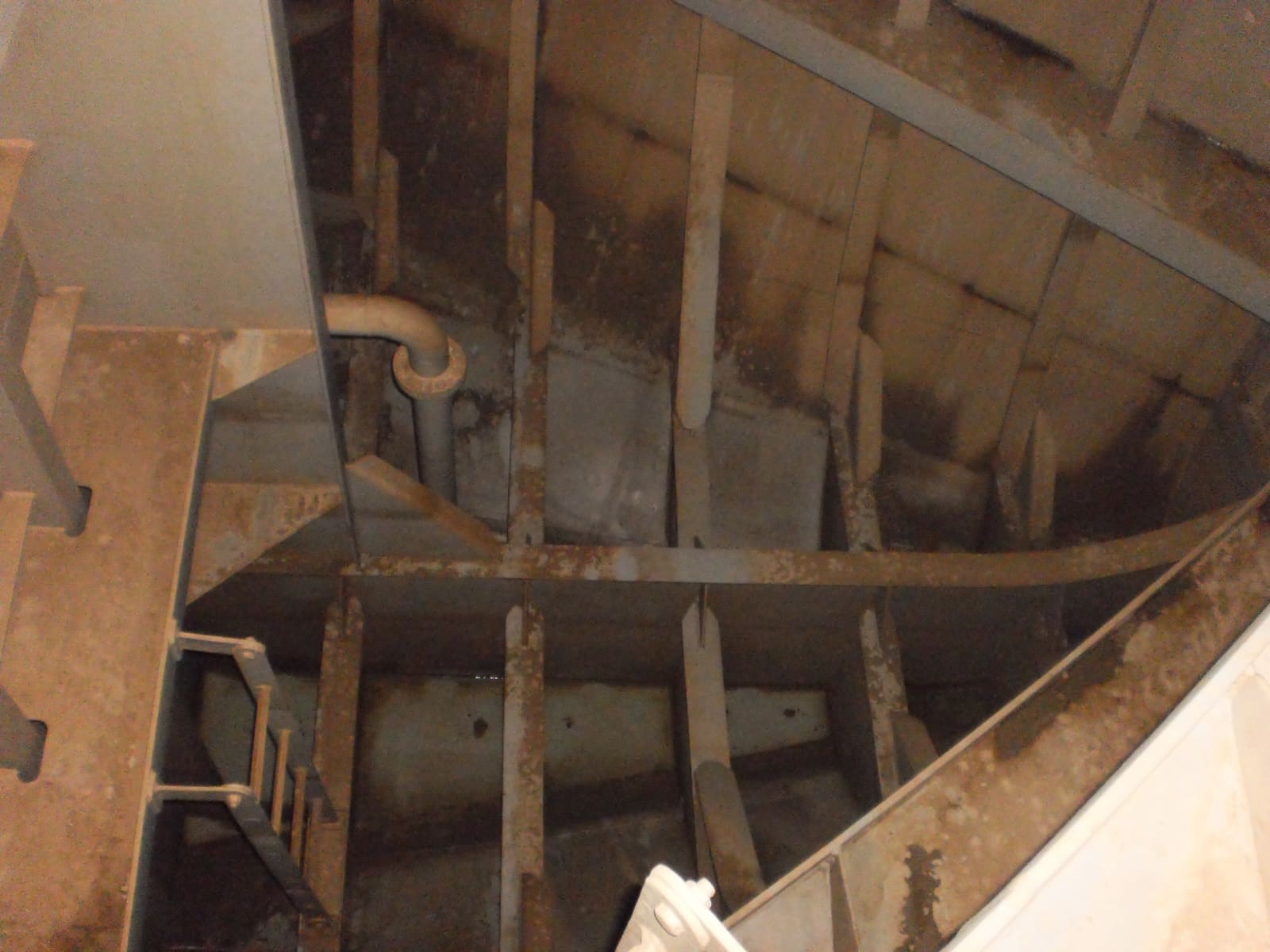
The definition goes on to name cargo holds, bilge spaces, ballast and other tanks, pump-rooms, chain lockers and engine crankcases — and says the list is not exhaustive. The question for a crew is never whether a space looks dangerous, but whether it meets one of the three characteristics.
What is new compared with A.1050(27)
Much of the 2011 text survives, but five changes will show on board, and each of them is something a system can hold rather than something a crew has to remember:
- An Enclosed Space Register (§2.8, §4.2): a ship-specific list of every enclosed space, with its connected and adjacent spaces, its hazards, the mitigations and how its atmosphere can change with the cargo or contents.
- No single-person entry (§3.11): the company should ensure that nobody enters an enclosed space alone.
- Carbon dioxide on the list (§7.4): steady readings of 20.9% oxygen, CO₂ below 0.5% by volume, under 1% of the lower flammable limit, and under 50% of the occupational exposure limit of any toxic vapour or gas.
- Signs at the entrance (§6.3 and appendix 3): portable “safe” and “unsafe” signs on the doors and hatches, changed when the space changes.
- A permit with a maximum (§5.2): its validity is set from the risk assessment and is never longer than eight hours.
The instrument itself has been mandatory for longer: since 1 July 2016 SOLAS regulation XI-1/7 has required ships to carry a portable atmosphere testing instrument able to measure at least oxygen, flammable gases or vapours, hydrogen sulphide and carbon monoxide before anybody enters an enclosed space.
Why the entry permit stops at eight hours
The notes to the model permit in appendix 2 say it again and add what happens in between: if the people inside come out and leave the space unattended, the permit is void and the space has to be inspected again. The permit itself carries the other condition in capitals — it is invalid if the ventilation stops or if any of the conditions on its checklist change.
There is no extension in the text. A job that needs more than eight hours needs a new permit, and a new permit means new atmosphere tests and a fresh look at the space. That is the point of the limit: a permit describes a space as it was when somebody checked it, and eight hours is as long as that description is allowed to stand.
Norway made the previous recommendations binding: in January 2024 Sjøfartsdirektoratet added sections 9-6 to 9-10 to the regulation on the working environment, safety and health of those working on board (FOR-2005-01-01-8), mirroring A.1050(27). Those sections were written before MSC.581(110), and we found no amendment reflecting it at the time of writing — so a Norwegian ship answers to both.
The attendant, the rescue team and the drill
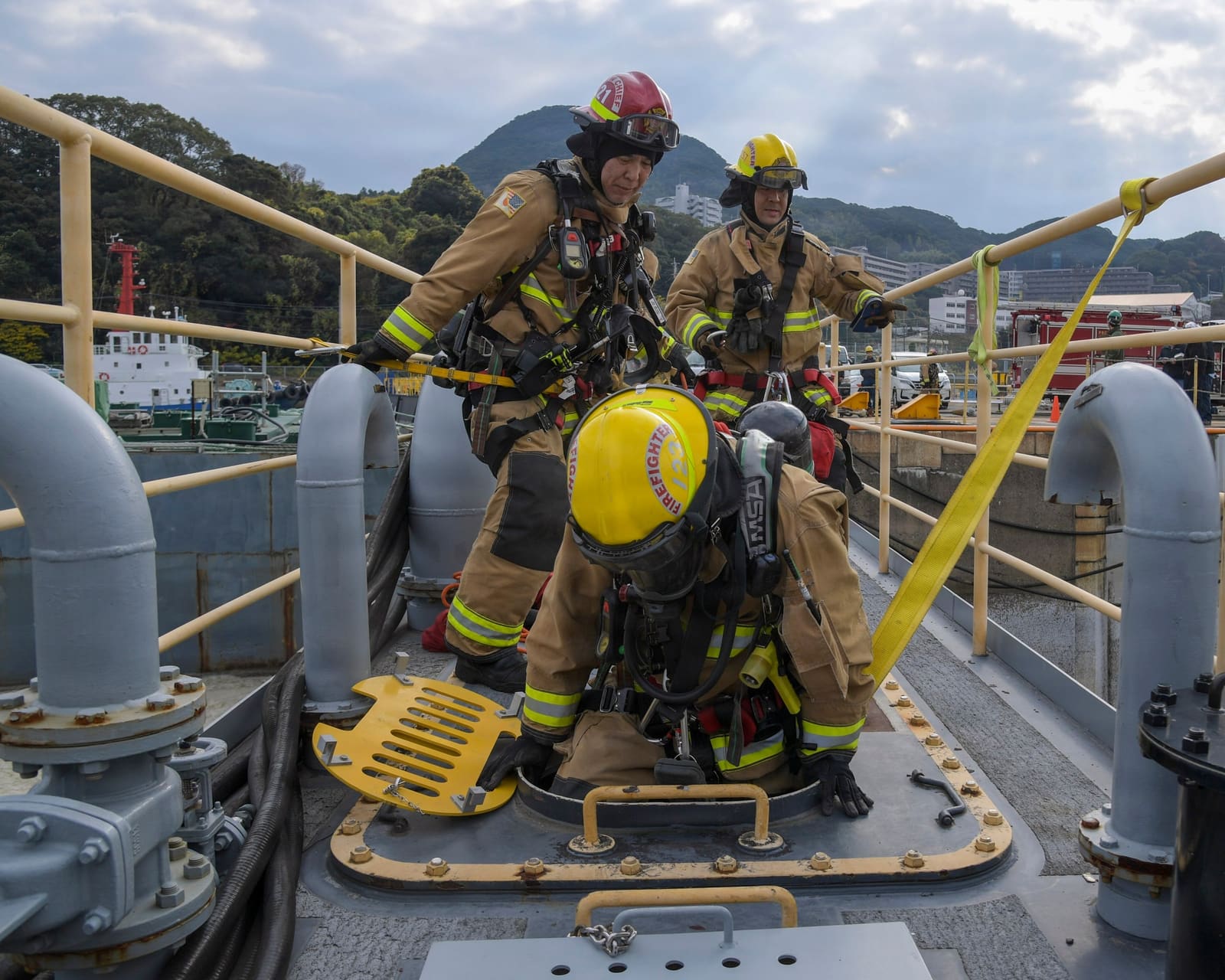
The attendant stays at the entrance, keeps in contact with those inside and starts the emergency procedure (§2.7). In an emergency the attendant should under no circumstances enter the space before help has arrived and the situation has been evaluated (§8.5) — the second casualty in an enclosed space is too often the first person who went in after the first.
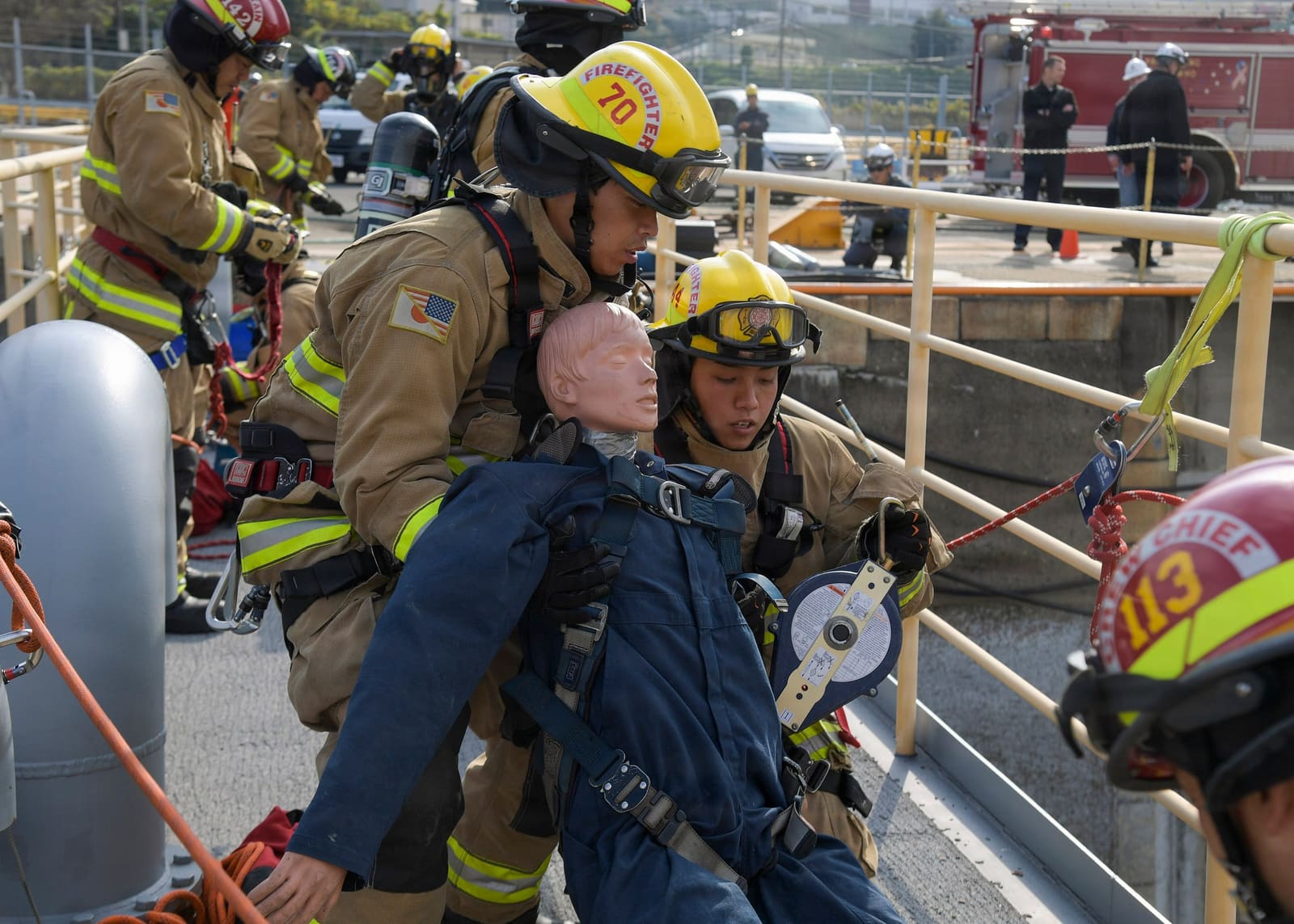
SOLAS regulation III/19 has required crew members with enclosed space entry or rescue responsibilities to take part in an entry and rescue drill at least once every two months since 1 January 2015. MSC.581(110) expects those drills to be held from the spaces in the ship’s own register (§3.8), covering protective equipment, communications, atmosphere-measuring instruments, rescue equipment and first aid.
Why it matters: a submission to the IMO’s cargo sub-committee in June 2025 (CCC 11/15, submitted by IBTA) counted at least 1,010 ship and shore workers who died in enclosed spaces on SOLAS ships between 2000 and 2024. Seven hundred of them were crew.
How NoRemarks holds the eight hours
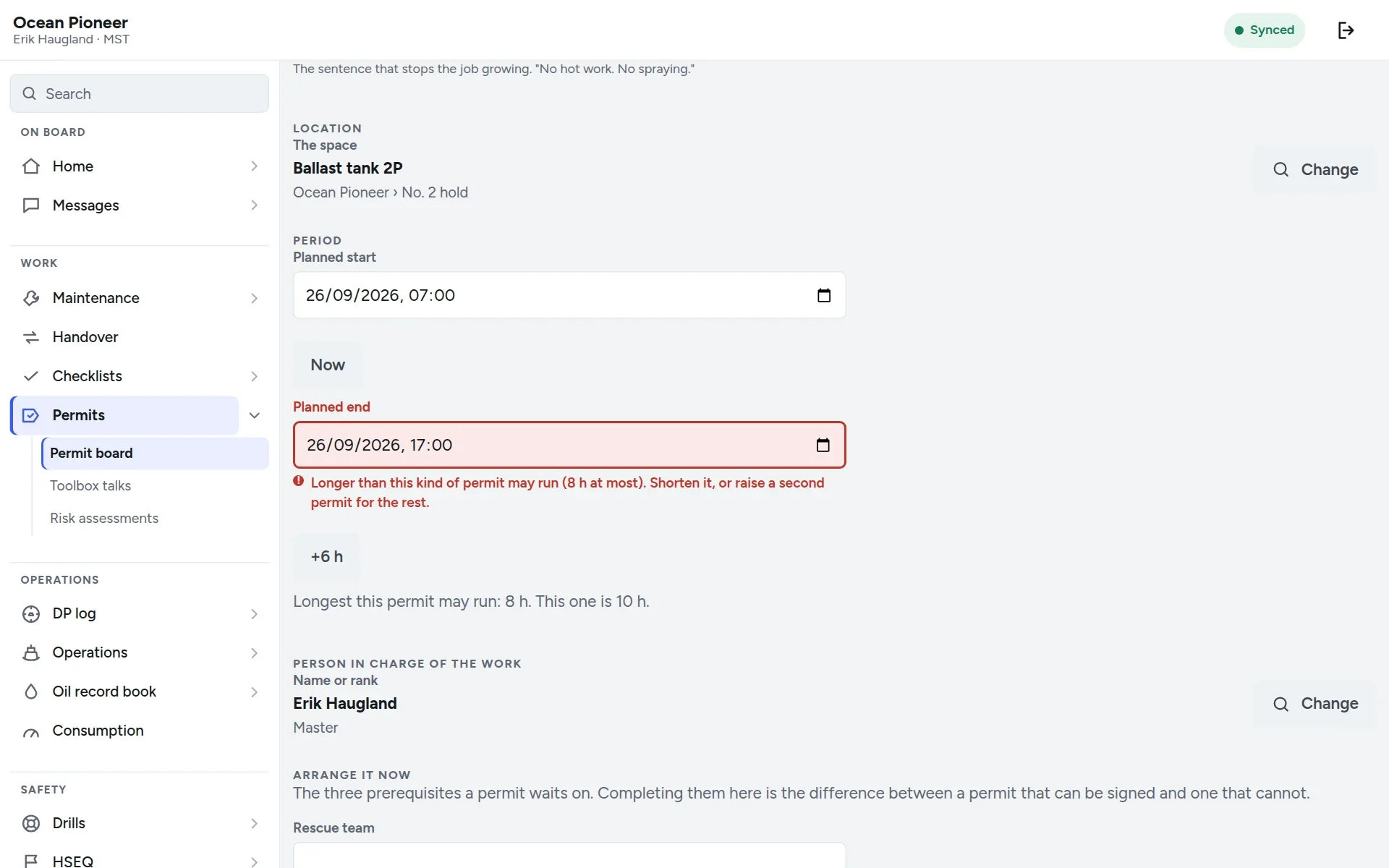
In NoRemarks the eight hours is not a default in a template that somebody can widen. An enclosed space entry permit is never raised, authorised or extended past eight hours — on the phone or tablet where it is filled in, and again on the server when the ship’s records arrive, whatever the device sends. A company may choose fewer hours; nobody can choose more.
The rest of the recommendations are held the same way, as rules rather than reminders:
- The permit knows its space: a place marked as an enclosed space asks for a rescue team, an attendant and a gas test before the permit can be authorised.
- Nobody enters alone is a control on the enclosed space template, confirmed before the work can start.
- Gas readings are held against their limits — the worst reading per gas against its minimum or maximum.
- Checks by kind of work: control points and PPE suggested for the job, answered Yes, No or N/A, with a reason where one is owed.
- The toolbox talk is held from the permit, or an existing one linked to it, and the attendees are recorded.
- The two-monthly enclosed space drill is scheduled per shift in the drills module, with its own checklist.
All of it works with no signal: a permit is raised, signed and closed on board and sent when the link returns. Read more about permits to work and checklists on board, or ask us for a demonstration with your own vessel.
Questions
What is an enclosed space entry permit?
A written permit, issued by the master or a responsible person the master nominates, that states the space, the work, the atmosphere tests and the precautions before anybody enters. MSC.581(110) says it should always be used where the risk assessment identifies any risk to health or life, and gives a model permit in its appendix 2.
How long is an enclosed space entry permit valid?
As long as the risk assessment says, and never longer than eight hours (§5.2 of MSC.581(110)). It becomes void earlier if the space is left unattended, if the ventilation stops or if any condition on its checklist changes.
Can the permit be extended?
The recommendations provide no extension. Work that runs past eight hours needs a new permit, with new atmosphere tests and a new inspection of the space.
What changed from A.1050(27) to MSC.581(110)?
The main changes are a ship-specific Enclosed Space Register, no single-person entry, carbon dioxide among the gases to test for, safe and unsafe signs at the entrance, and the eight-hour maximum on the permit.
Is MSC.581(110) mandatory?
It is an IMO recommendation, not a SOLAS amendment. It becomes binding through flag state rules and through the company’s safety management system under the ISM Code, and the enclosed space drill itself has been mandatory under SOLAS III/19 since 2015.
Sources
- IMO Resolution MSC.581(110): Revised recommendations for entering enclosed spaces aboard ships (27 June 2025)
- IMO: Maritime Safety Committee, 110th session — meeting summary
- IMO: Enclosed space ship safety rule enters into force (SOLAS XI-1/7, 2016)
- Lloyd’s Register statutory alert 33/2014: enclosed space entry and rescue drills
- Lovdata: FOR-2005-01-01-8, regulation on the working environment, safety and health on board
- IBTA, CCC 11/15: Enclosed space fatalities aboard ships for the period 2000 to 2024