
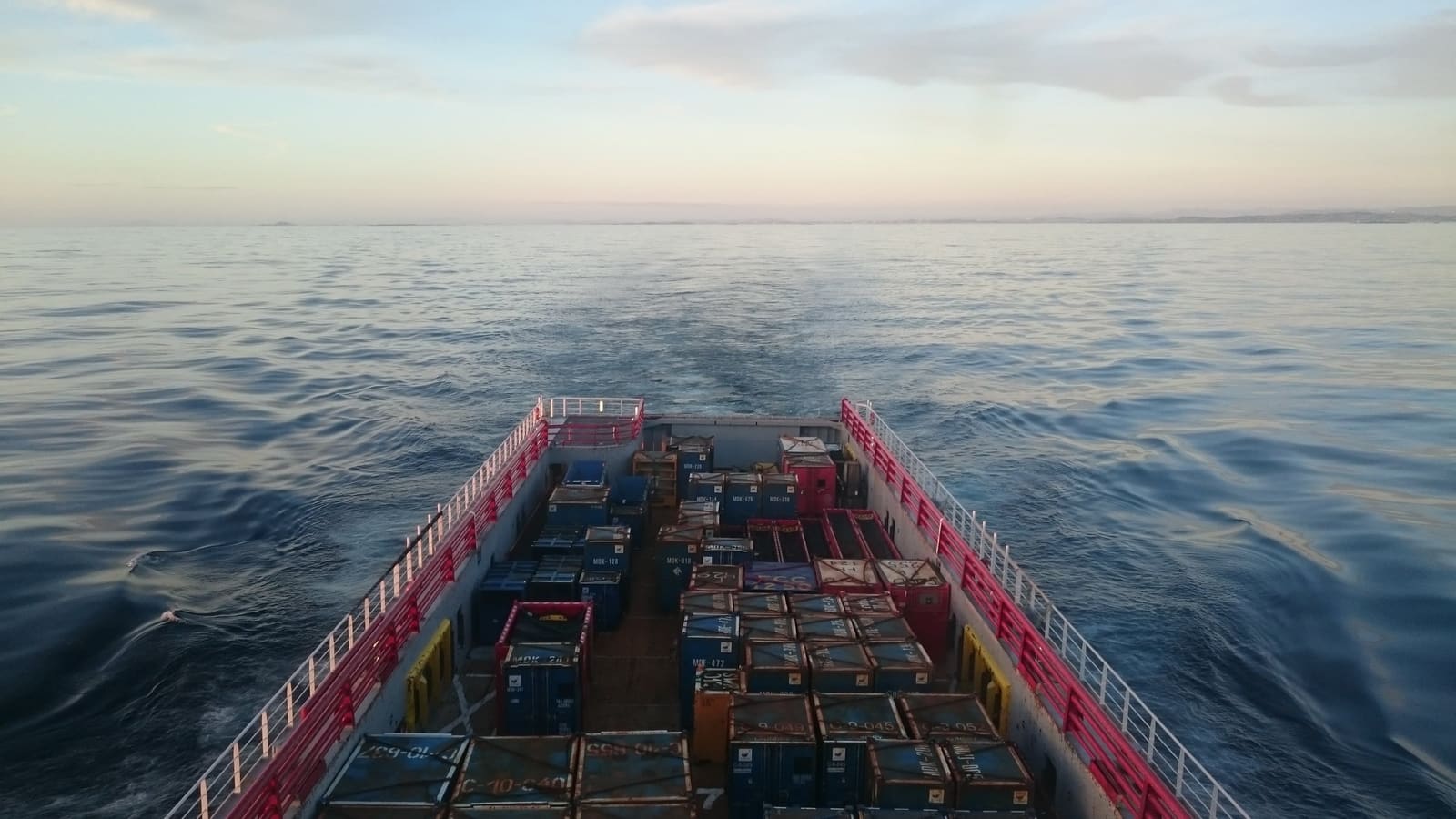
Fleet and ship management · Ålesund
Ship management that works at sea — with or without a signal.
Maintenance, crew and certificates, rest hours, checklists, permits, drills and the record books. One system for the ship and the office, built to keep working when the link does not.
Two months free · no card · hosted in the EEA
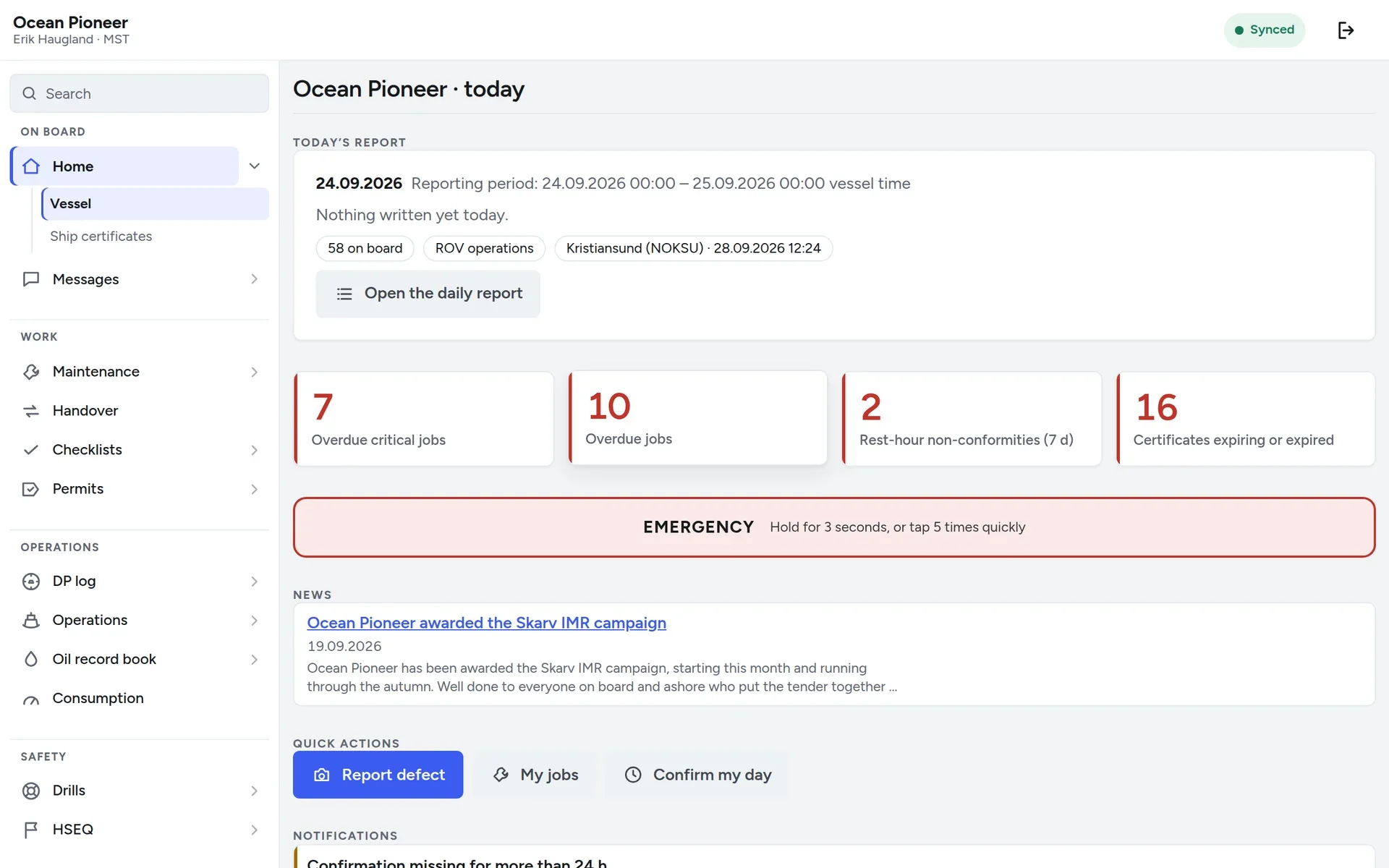
- 19modules, all included
- Offlineevery screen, every record
- Unlimitedusers per vessel
- EEAhosted, and yours to export
- NOK 4 900per vessel per month
Why NoRemarks
Built for the way a ship actually works
Built for no signal
Every screen works in a machinery space, a fjord or a field with nothing. Records are made, signed and closed on board, and sent when the link returns.
One product, every module
No edition that withholds the oil record book and no module sold separately. The drills read the crew list; a defect reported on deck becomes a job on its component.
The regulation built in
Each module starts from the text it answers to — STCW, MLC, SOLAS, MARPOL, the ISM and ISPS Codes and the Norwegian regulations — and the same rules run on the device and on the server.
The product
From the engine room to the office
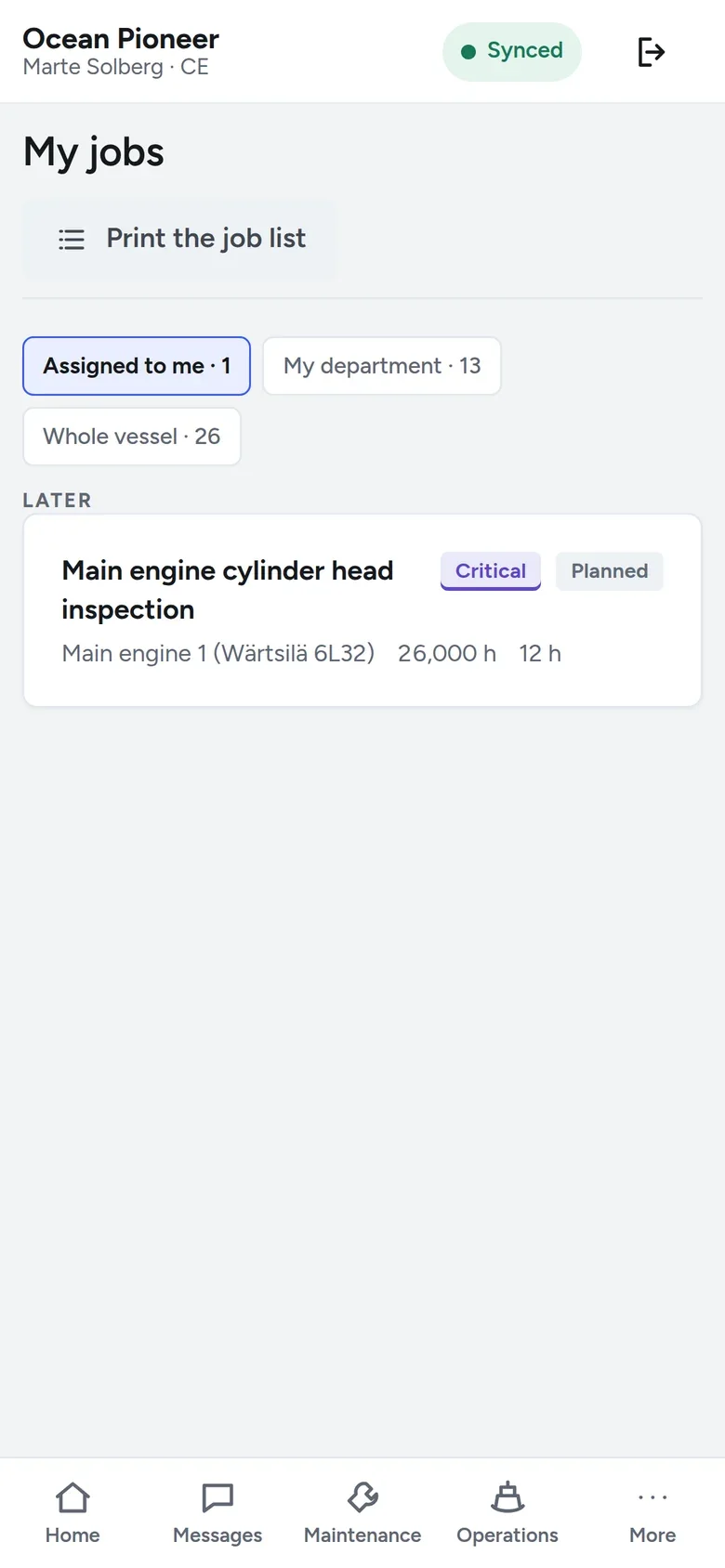
Planned maintenance
The plant, and what falls due
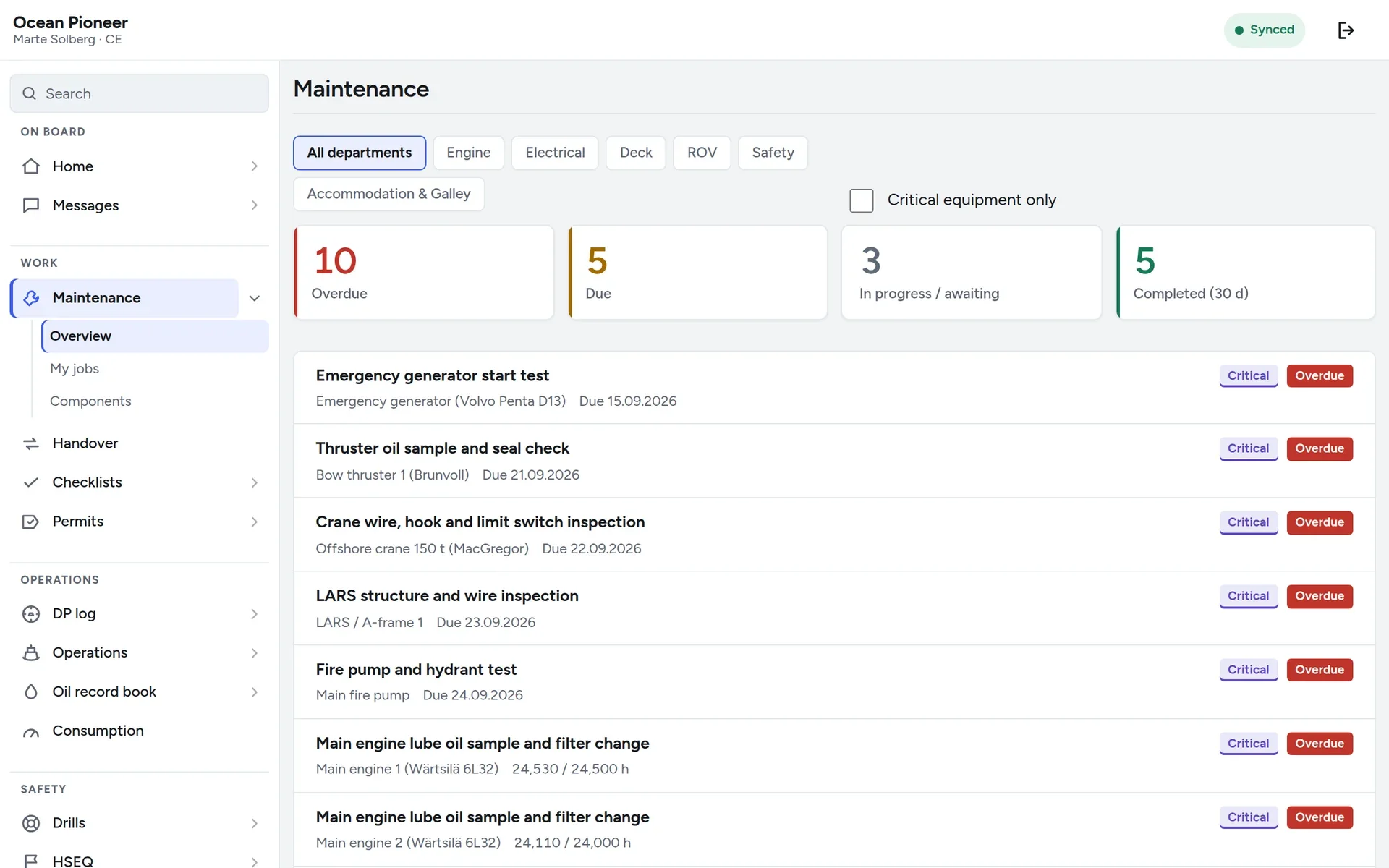
A component tree with criticality and class references, jobs by calendar or running hours, and a due list each department works from. A postponement needs a risk assessment, and critical work cannot slip past its own maximum.
- Calendar and running-hour intervals
- Notes for the next person, time used and a checklist on every job
- A defect reported on deck becomes a job on the component
Work and rest hours
Rest hours on the seafarer’s own phone
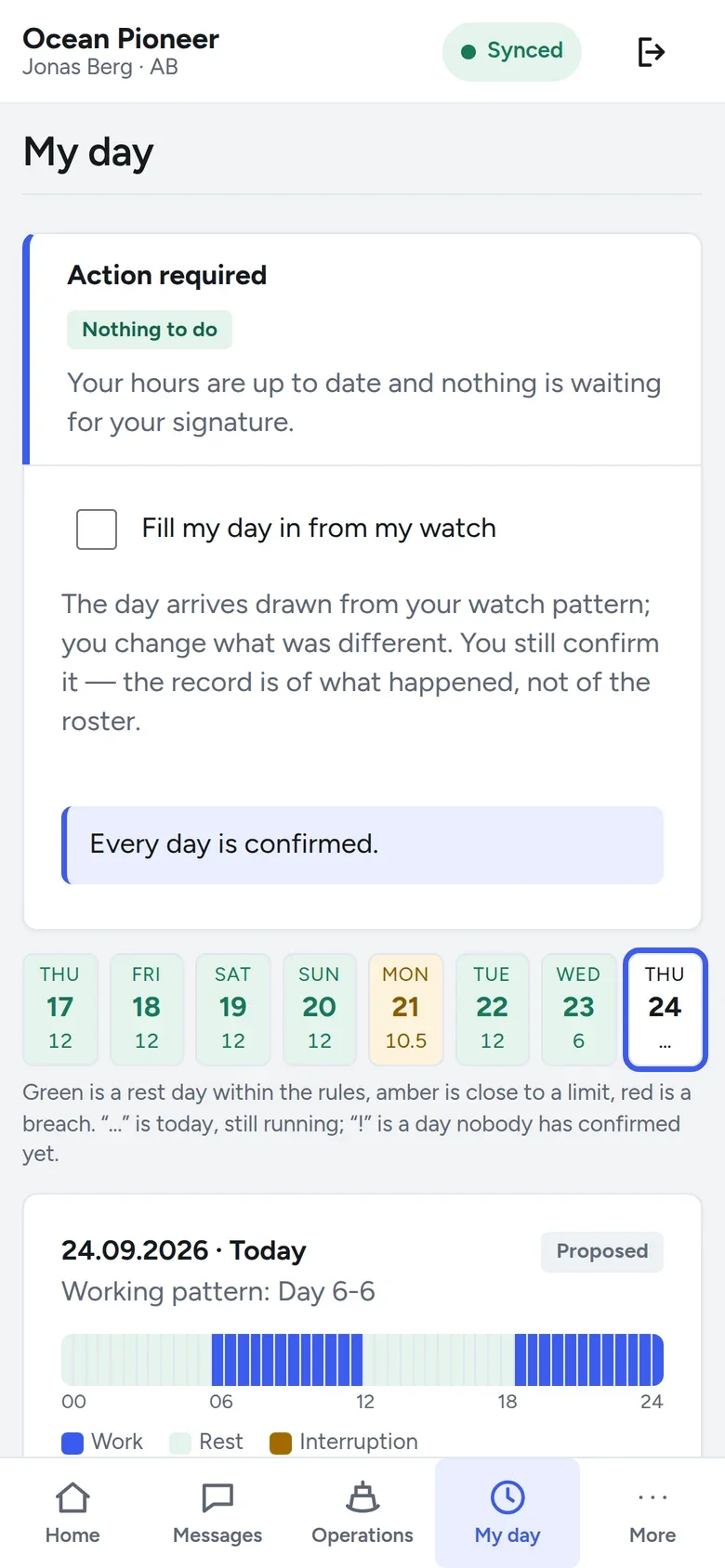
The day arrives drawn from the watch pattern. The seafarer changes what was different and confirms it; the four STCW and MLC limits are checked as it goes; the master reviews, signs the month and prints the KS-0300 form.
- 10 hours in any 24, 77 in any 7 days
- Non-conformities flagged, never rounded away
- Signed with a PIN, printed on the statutory form
- Rest in any 24 hours12 h≥ 10 h
- Rest in any 7 days82.5 h≥ 77 h
- Longest rest period6 h≥ 6 h
- Between rest periods6 h≤ 14 h
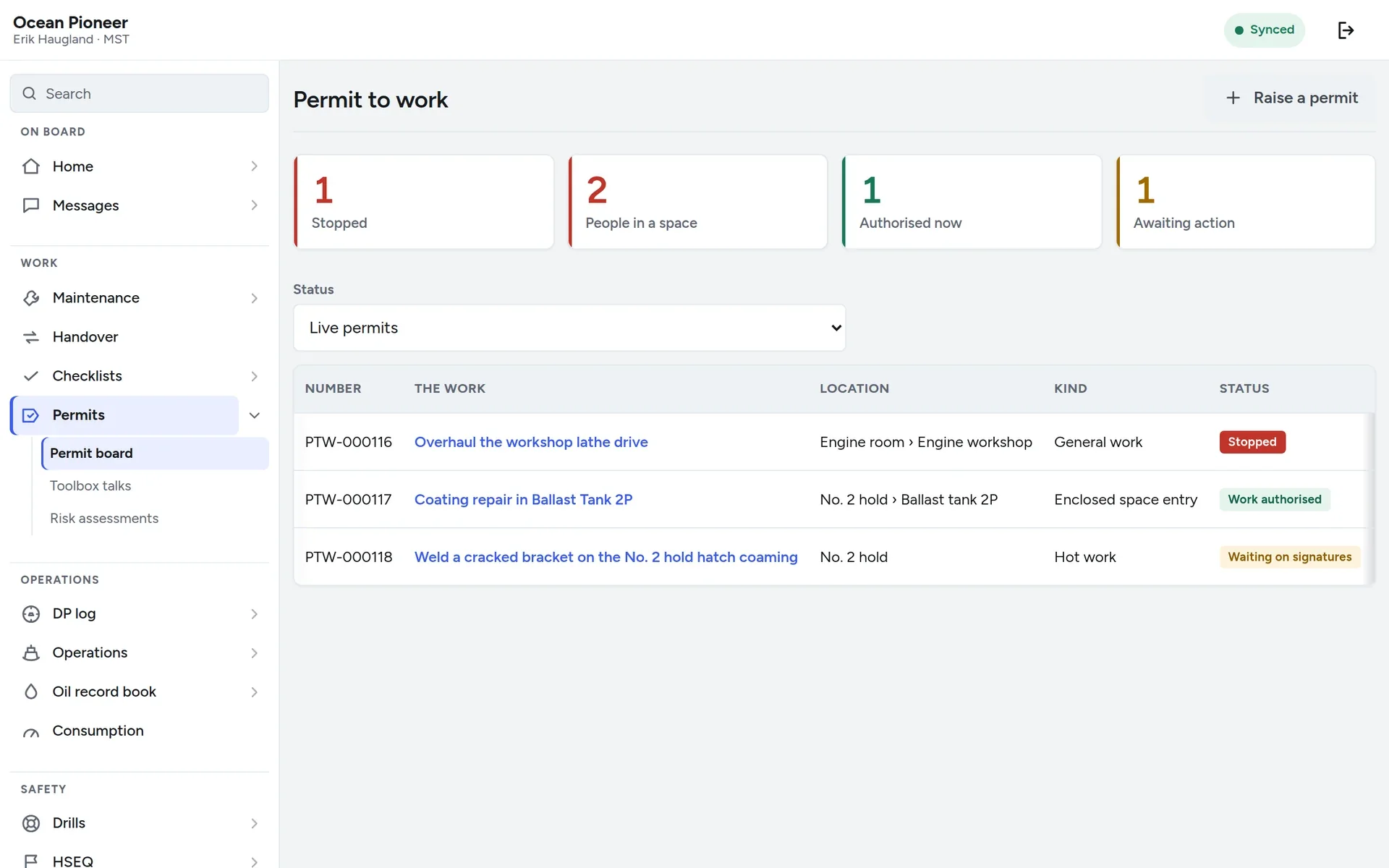
Permits, gas tests and checklists
The order of the work, enforced
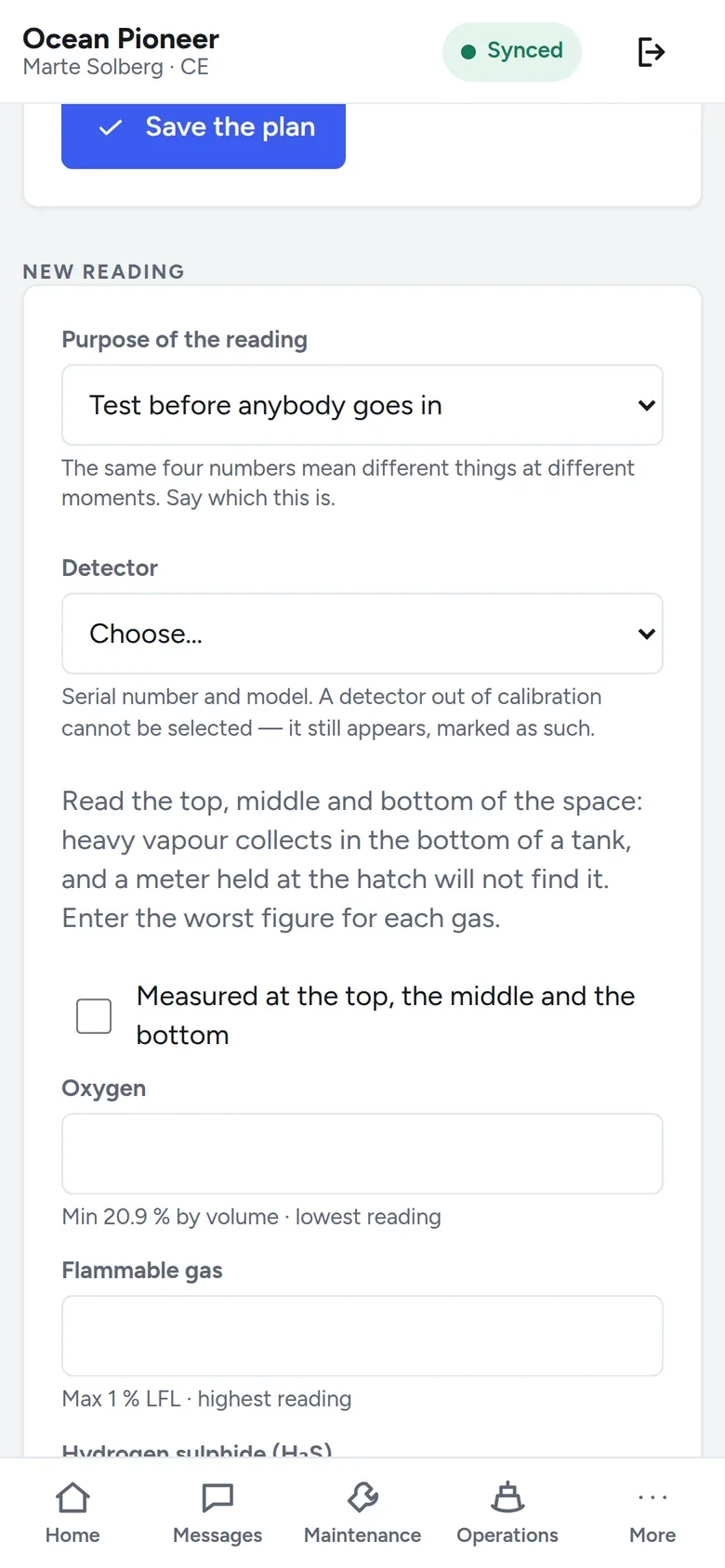
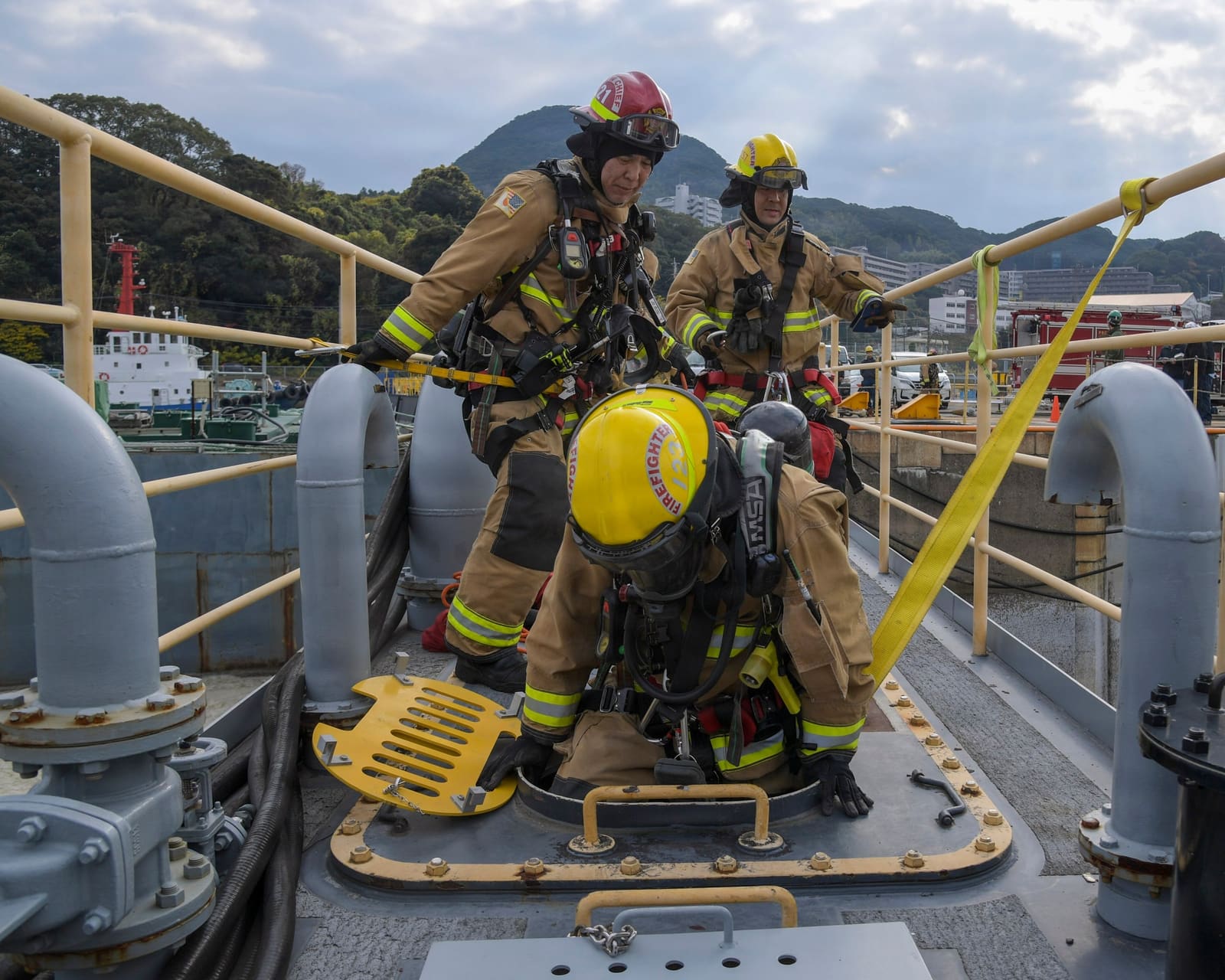
A permit knows what its work and its space require — a rescue team, an attendant, a gas test — and cannot be authorised before them. Gas readings are held against their limits, and the day’s checklists appear when they fall due.
- Hot work, working at height and enclosed space entry
- Worst reading per gas against its minimum or maximum
- Signatures in the order the work needs them
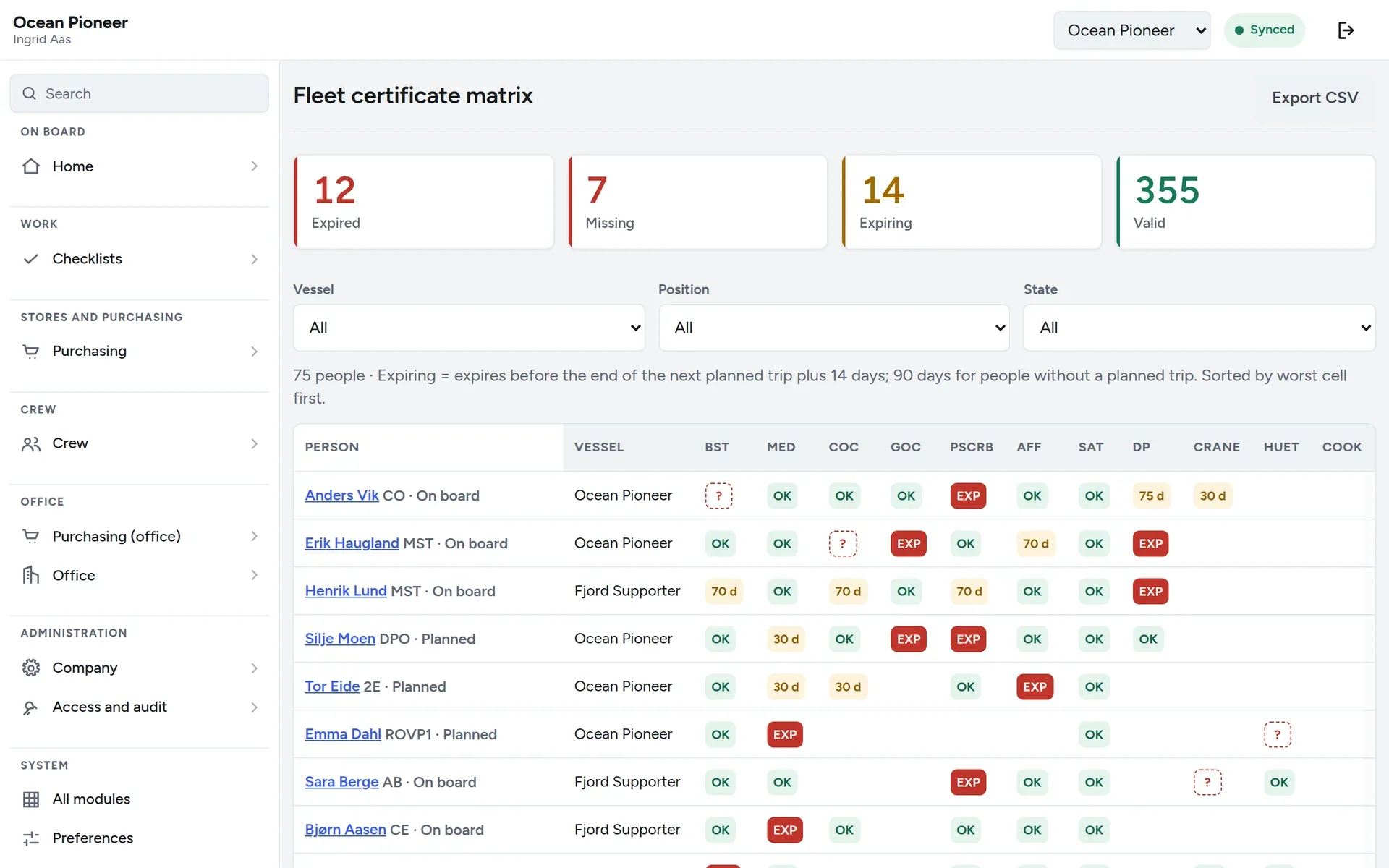
The fleet office
Every vessel on one screen
One card per vessel, worst state first. The certificate matrix measures expiry against the next crew change, and the relief pool is ranked by who holds what the position needs.
- Fleet overview, certificate matrix and rotation planner
- Purchasing approvals under your own thresholds
- The daily report from every vessel, every morning

Offline-first
A ship is offline. So the software was built that way.
Most ship systems are written as though the ship were an office: a synchronisation job, a spinner, and a crew that learns within a fortnight to keep the real record on paper.
Here the device holds the vessel’s data and every rule that governs it. Nothing waits for a server — and when the link returns, what was done on board is sent, checked again by the same rules, and never quietly rejected.
- Recorded on boardWritten, signed and closed with no signal.
- Held in a queueDurably, on the device, in the order it happened.
- Sent when the link returnsAnd checked ashore by the same code.
- Rest hours confirmedJonas Berg
- Oil record book · C 11.1Marte Solberg
- Permit PTW-0117 authorisedErik Haugland
- Every operation checked again
- Two devices, one answer
- Hash-chained audit trail
Nineteen modules
Everything a vessel keeps, in one place
All of them included. What a vessel is required to keep is not an upsell.
Technical and maintenance
The plant, what it burns, what it is short of, and the book the engine room is judged by.
Planned maintenance
Components, criticality and jobs that fall due on a running hour or a calendar, with postponement that has to be justified.
ISM Code, clause 10Oil Record Book
Part I kept electronically, with entries that cannot be altered after signature and a true copy that prints.
MARPOL Annex I, Reg. 17Consumption
Fuel, lube oil and fresh water as a ledger, so the balance is derived rather than typed.
Bunker delivery notePurchasing
Requisition to receipt, on the shipowner’s own thresholds, where nobody approves their own commitment.
The shipowner’s own policyCrew and welfare
Who is on board, what they hold, how long they worked, where they sleep and what they are told.
Crew and certificates
Who is on board, what each position must hold, and which certificate expires before the crew change.
FOR-2011-12-22-1523Work and rest hours
The daily record, the master’s review and the KS-0300 print, with every breach flagged as the rule that was broken.
FOR-2007-06-26-705 § 10Accommodation
Decks, cabins and berths, who sleeps where, and the cleaning record — tied to the watch so nobody is woken.
MLC 2006, Regulation 3.1Messaging and notices
Person to person, office to fleet, and a notice whose acknowledgements are counted per version in force.
Arbeidsmiljøloven § 9-5Medicine chest
The chest, the controlled-drugs control book, treatments given and the annual expert inspection.
FOR-2001-03-09-439Safety and the ISM system
The checks, the drills, the permits, the reports and the gangway — the daily work of a safety management system.
Checklists
The daily, weekly and monthly checks on board, with versioned wording and no duplicated occurrence when two devices are offline.
ISM Code, clause 7Drills and exercises
Statutory drills per shift and per person, with the departure check that says whether this crew may sail.
SOLAS III/19.3.2Permit to work
Hot work, height, enclosed space and general permits, with the isolations, the toolbox talk and the risk assessment attached to the job.
Offshore Norge 088Defects and observations
One button to report a defect or a safety observation, from any screen, by anybody on board.
ISM Code, clause 9Gangway and ship security
A tablet at the gangway that signs people on and off, logs visitors, and shows who is on board right now.
FOR-2004-06-22-972Operations and record books
What the ship is doing, the report the office reads every morning, the DP log and the handovers between watches.
Operations log and daily report
Port calls, activity, the daily report to charterer and owner, and the Garbage Record Book.
MARPOL Annex V, Reg. 10Dynamic positioning
The DP log, the capability plan, versioned DP checklists and an event report that does not wait for the office.
MSC.1/Circ.1580Handovers and forms
One form engine behind every signed piece of paper on board, with the wording frozen at the moment of signature.
ISM Code, clause 11Fleet and office
The register everything points into, and the office’s view across every vessel.
Regulation
Built against the rules you are audited on
Every module page opens with the requirement it was built against, quoted, with its reference.
ISM Code, clause 3Vessel and fleet registerISM Code, clause 10Planned maintenanceFOR-2011-12-22-1523Crew and certificatesFOR-2007-06-26-705 § 10Work and rest hoursISM Code, clause 7ChecklistsISM Code, clause 11Handovers and formsSOLAS III/19.3.2Drills and exercisesOffshore Norge 088Permit to workISM Code, clause 9Defects and observationsMARPOL Annex I, Reg. 17Oil Record BookMARPOL Annex V, Reg. 10Operations log and daily reportBunker delivery noteConsumptionMSC.1/Circ.1580Dynamic positioningThe shipowner’s own policyPurchasingFOR-2001-03-09-439Medicine chestArbeidsmiljøloven § 9-5Messaging and noticesFOR-2004-06-22-972Gangway and ship securityMLC 2006, Regulation 3.1AccommodationISM Code, clause 12The fleet office
Price
NOK 4 900per vessel per month
Every module and unlimited users, with no implementation project and no onboarding fee. The first two months are free and no card is taken to start. Subscribe and the price is held for five years.
Lower than what you pay today. Guaranteed. Show us what you pay per vessel for your ship management system today, and we will offer NoRemarks for less — every module included, and that price held for five years.
Included
- All nineteen modules
- Unlimited users on every vessel
- The mobile apps and the gangway tablet
- The AIS position feed
- Export of everything, whenever you want it
- Support from the people who built it

Ålesund
Built on the coast, for the vessels on it
NoRemarks is written in Ålesund, in Norwegian and in English, by the people who built it. They answer your requests themselves, and something you report as wrong is put right quickly.
About usInsights
From Insights
Questions
What shipowners ask first
Is the electronic oil record book approved?
Approval of an electronic record book is granted by the flag administration to a shipowner, not to a vendor, and it is a conversation between the two of them. What we provide is a record built to the requirements it will be judged against — entries that cannot be altered after signature, corrections made as new entries, a true copy that prints in the statutory layout — and the documentation of how it works, for that conversation.
What happens if a vessel has no signal for a week?
The work carries on. Jobs are closed, rest hours are recorded and reviewed, the oil record book is written, checklists are completed and defects are reported with photographs — each on the device it is done on, where it queues in a durable outbox.
What a week without a link does change is that the devices on board do not see each other’s work until it returns, because they reach each other through the server ashore. A permit is therefore raised, gas-tested and signed on one device that goes round the people who sign it, as a clipboard would: each signs as themselves, with their own PIN or a drawn signature, and the permit records whose device it was. Its check against other work covers the permits that device knows about, and says so.
When the link comes back each device sends what it did and pulls what it missed. Nothing is lost and nothing disappears silently: the rules ran on the device when the work was done, and the rare entry that another device’s work has overtaken — two people closing the same job — is shown to the person who made it.
Can we move our existing maintenance register in?
Yes. Components, jobs, intervals and history come in as ordinary rows — there is no second-class imported data and no reconciliation project afterwards. What takes the time is not the import; it is deciding which of the eleven thousand jobs in the old system are real.
Is there an app, or is it a website?
Both, and it is the same code. It installs from the browser to a home screen and runs full-screen with no address bar, and it is packaged for the App Store and Google Play for companies whose device management requires that.
Who can see what?
A role is granted at a scope — the company, a fleet, or a single vessel — and the product asks whether this person may do this thing here, rather than what their title is. Delegations expire by themselves and explicit denials outrank grants.
One thing nobody can see, at any level: another person’s messages.
Put one vessel on it for two months
No card and no implementation project. A company adds its own vessel and its own people on its own afternoon — and if it is not for you, you stop, with your data exported first.